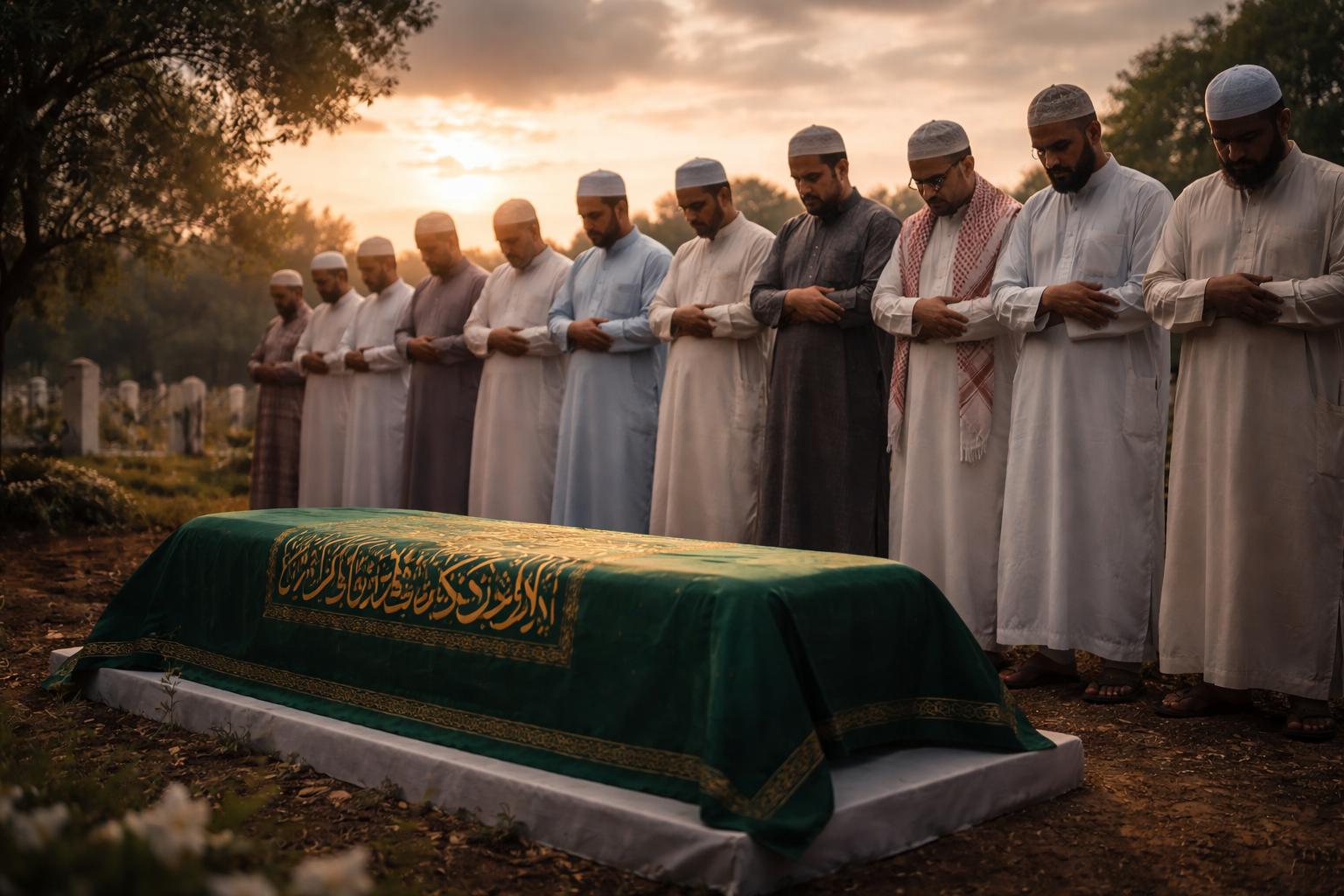
Introduction: The Final Farewell
Death is an inevitable reality. One day, we will all stand to bid farewell to a loved one, or people will stand to bid farewell to us. "Salat Al-Janazah" is the last gift you can offer to a deceased Muslim before they are buried. It is not just a ritual; it is an "intercession" (Shafa'ah) from you to Allah on their behalf. The Prophet (PBUH) said: "Whenever a Muslim dies, and a group of Muslims numbering one hundred pray over him, all interceding for him, their intercession will be accepted." Sadly, many people stand in funeral prayers silently, not knowing what to recite after each Takbir! In this guide, we will explain the method of the Funeral Prayer step-by-step and the correct etiquettes of offering condolences.
Status and Virtues of Funeral Prayer
Ruling: It is "Fard Kifayah" (Communal Obligation). If some people perform it, the obligation is lifted from the rest of the community. If no one performs it, the entire community sins.
Reward: "Whoever attends the funeral until the prayer is offered will have one Qirat (of reward), and whoever attends until the burial is finished will have two Qirats. It was asked: 'What are two Qirats?' He said: 'Like two huge mountains.'" (Imagine a mountain of good deeds like Mount Uhud!).
How to Perform Salat Al-Janazah (The 4 Takbirs)
Unlike normal prayers, Salat Al-Janazah has NO Ruku (bowing) and NO Sujood (prostration). It is performed while standing. It consists of 4 Takbirs (saying "Allahu Akbar").
1. The First Takbir:
- Raise your hands, say "Allahu Akbar," then fold them on your chest.
- Recite "Surah Al-Fatiha" silently. (Some scholars recommend adding a short Surah, but Al-Fatiha is the pillar).
2. The Second Takbir:
- Say "Allahu Akbar."
- Recite "Salat Al-Ibrahimiyyah" (The same Tashahhud prayer you say at the end of regular Salah): "Allahumma Salli 'ala Muhammadin wa 'ala ali Muhammad..."
3. The Third Takbir (The Most Important):
- Say "Allahu Akbar."
- Make sincere Dua for the deceased. This is the core of the prayer.
- The Best Prophetic Dua: "Allahummaghfir lahu warhamhu, wa 'afihi wa'fu 'anhu, wa akrim nuzulahu, wa wassi' madkhalahu, waghsilhu bil-ma'i wath-thalji wal-barad..."
- (Translation: O Allah, forgive him and have mercy on him, keep him safe and sound and forgive him, honor his place of rest and make his entrance wide; wash him with water, snow, and hail...).
- If the deceased is a child: Pray that they become a forerunner and a source of reward for their parents.
4. The Fourth Takbir:
- Say "Allahu Akbar."
- Pause for a moment and pray for all Muslims and yourself: "Allahumma la tahrimna ajrahu wa la taftinna ba'dahu..." (O Allah, do not deprive us of his reward and do not try us after him).
- Then say "Tasleem" (Assalamu Alaikum wa Rahmatullah) once to the right side (saying it twice is also permissible).
Etiquettes of Condolence (Ta'ziyah)
Ta'ziyah means comforting the grieving family and encouraging patience.
1. What to Say?: The best condolence is what the Prophet (PBUH) said: "To Allah belongs what He took, and to Him belongs what He gave, and everything with Him has an appointed time. So be patient and seek reward." It is also common to say: "May Allah increase your reward, grant you the best comfort, and forgive your deceased."
2. Avoid Innovations: Wailing (screaming/tearing clothes) is strictly forbidden (Haram). It is also disliked to host lavish banquets for guests during mourning; rather, neighbors should send food to the grieving family.
3. Duration: Scholars suggest limiting condolences to 3 days, unless for someone who was away and didn't know about the death.
Visiting Graves
Visiting graveyards is a Sunnah for men to remember the Afterlife.
- Dua upon entering: "Assalamu alaikum ahlad-diyari minal-mu'minina wal-muslimin..." (Peace be upon you, O inhabitants of the dwellings, believers and Muslims... We shall join you, God willing. We ask Allah for well-being for ourselves and for you).
Conclusion: Be Prepared
You never know when you will be called to pray for a friend or relative. You might even be the Imam. Memorize these Takbirs and Duas well. Follow funeral processions, for they soften the hardened heart and remind you that one day, you will be the one lying there, in desperate need of a sincere prayer from a Muslim brother.